MBBS Guide
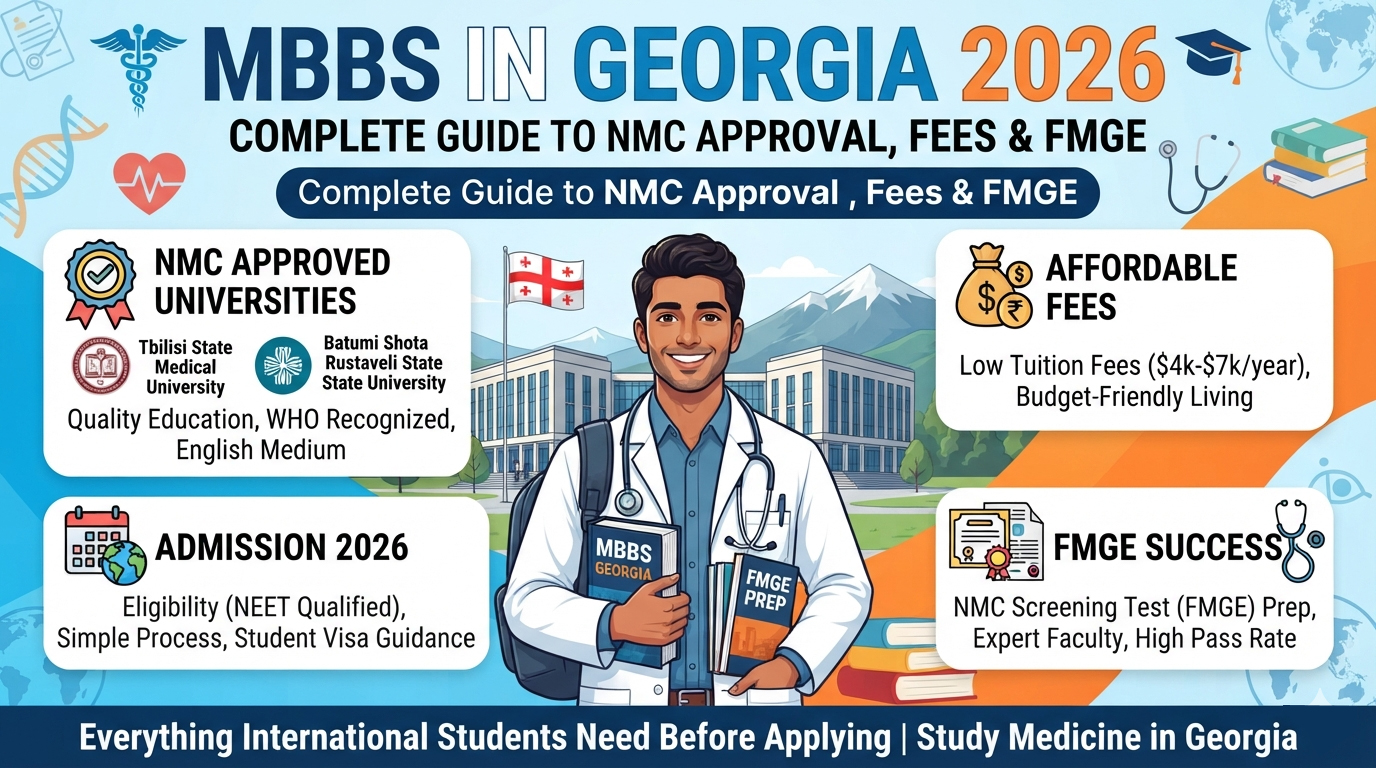
MBBS in Georgia 2026: Complete Guide to NMC Approval, Fees & FMGE
NMC approved medical universities, WHO recognition, fee structure, and FMGE preparation for the 2026 intake.
Read More → ← Back to Blog
International students planning to study or currently pursuing their education in Georgia should be aware of several important regulatory changes taking effect from 1 September 2026.
These new requirements relate to student status, academic progress, academic registration, legal stay, and study residence permits. Understanding and complying with these regulations is essential for maintaining your student status and lawful stay in Georgia.
At GeorgianUniversities.com, we believe international students should have access to clear and practical information when planning their education in Georgia. Below is a summary of the key requirements you need to know.
Maintaining active student status is particularly important for international students whose legal stay in Georgia is based on their studies.
Under the new regulations, if an international student's student status remains suspended for 90 days, this can become a legal ground for termination of their study-based legal stay in Georgia.
The university is required to report such cases to the relevant state authority.
What this means for you: don't ignore a suspension of your student status. If your status has been suspended, contact your university as soon as possible to understand the reason and the steps required for reinstatement.
International students are also required to maintain a minimum level of academic progress — accumulating more than one-third of the maximum annual academic credits.
For a standard academic workload of 60 ECTS credits per academic year, this means students must complete more than 20 ECTS credits. Simply completing exactly 20 ECTS is not sufficient — the requirement is to exceed that figure.
Failure to meet this academic progress requirement can result in:
Important: where student status is suspended due to failure to meet academic progress, the 90-day grace period does not apply before the student's legal stay may be affected. Take your credit requirements seriously throughout the year.
New international students must pay close attention to the academic registration process. During their first semester of study, they are required to complete academic registration within three weeks from the start of their studies.
Failure to complete academic registration within this period can result in the suspension of student status. If that suspension then remains in place for 90 days, it may become a ground for termination of the student's legal stay.
Advice for newly enrolled students:
Do not assume that being admitted to a university automatically means all registration requirements are complete.
Students whose status has been suspended may request reinstatement at any time. However, the timing of that request affects when studies can resume.
If a reinstatement request is submitted more than two weeks after the beginning of the academic process, the student will resume studies from the following semester rather than the current one.
Why timing matters: act promptly after a suspension. Delaying the reinstatement process may mean losing the current semester entirely — contact your university as soon as possible to understand your options and deadlines.
Students holding a study residence permit must also be aware of restrictions on prolonged absence from Georgia.
| Rule | Detail |
|---|---|
| Maximum absence | 183 days or more during any consecutive 12-month period is not permitted |
| Practical limit | Keep your time outside Georgia to 182 days or fewer within the applicable 12-month window |
| Possible exceptions | Medical treatment, official exchange programmes |
Students planning an extended stay outside Georgia should check whether their circumstances fall under an applicable exception, and consult their university or the relevant state authority before making travel arrangements.
If an international student's legal stay in Georgia is terminated, or a decision on the student's expulsion is issued, the university may also terminate the student's student status.
This highlights the importance of maintaining both your academic obligations and your legal immigration status — international students should treat both as equally important throughout their studies.
The new regulations make it more important than ever for international students in Georgia to remain informed and proactive.
Regularly check your student status and respond promptly to any suspension or notification.
For a standard 60-ECTS year, complete more than 20 ECTS credits.
New students: complete first-semester registration within three weeks of starting.
Request reinstatement within two weeks to avoid losing the current semester.
Keep absences under 183 days in any 12-month period, unless an exception applies.
Ensure your legal stay and immigration documentation remain valid throughout your studies.
Georgia continues to be an attractive destination for international students seeking quality higher education in a culturally rich and increasingly international environment. However, studying abroad also comes with important academic and legal responsibilities.
The regulatory changes effective from 1 September 2026 make it especially important to stay informed about university obligations, academic progress, registration requirements and immigration status.
If you are already studying in Georgia, speak with your university's international student or administrative office about your individual circumstances. If you are planning to study in Georgia, make sure you understand the relevant requirements before beginning your studies.
Your academic progress and legal status go hand in hand — staying informed and acting on time can help you avoid unnecessary complications during your studies in Georgia.
Disclaimer: This article is for general informational purposes and summarizes regulatory information for international students in Georgia effective from 1 September 2026. Individual circumstances may vary. Students should consult their university and the relevant Georgian state authorities for official guidance concerning their specific situation.
NMC approved medical universities, WHO recognition, fee structure, and FMGE preparation for the 2026 intake.
Read More →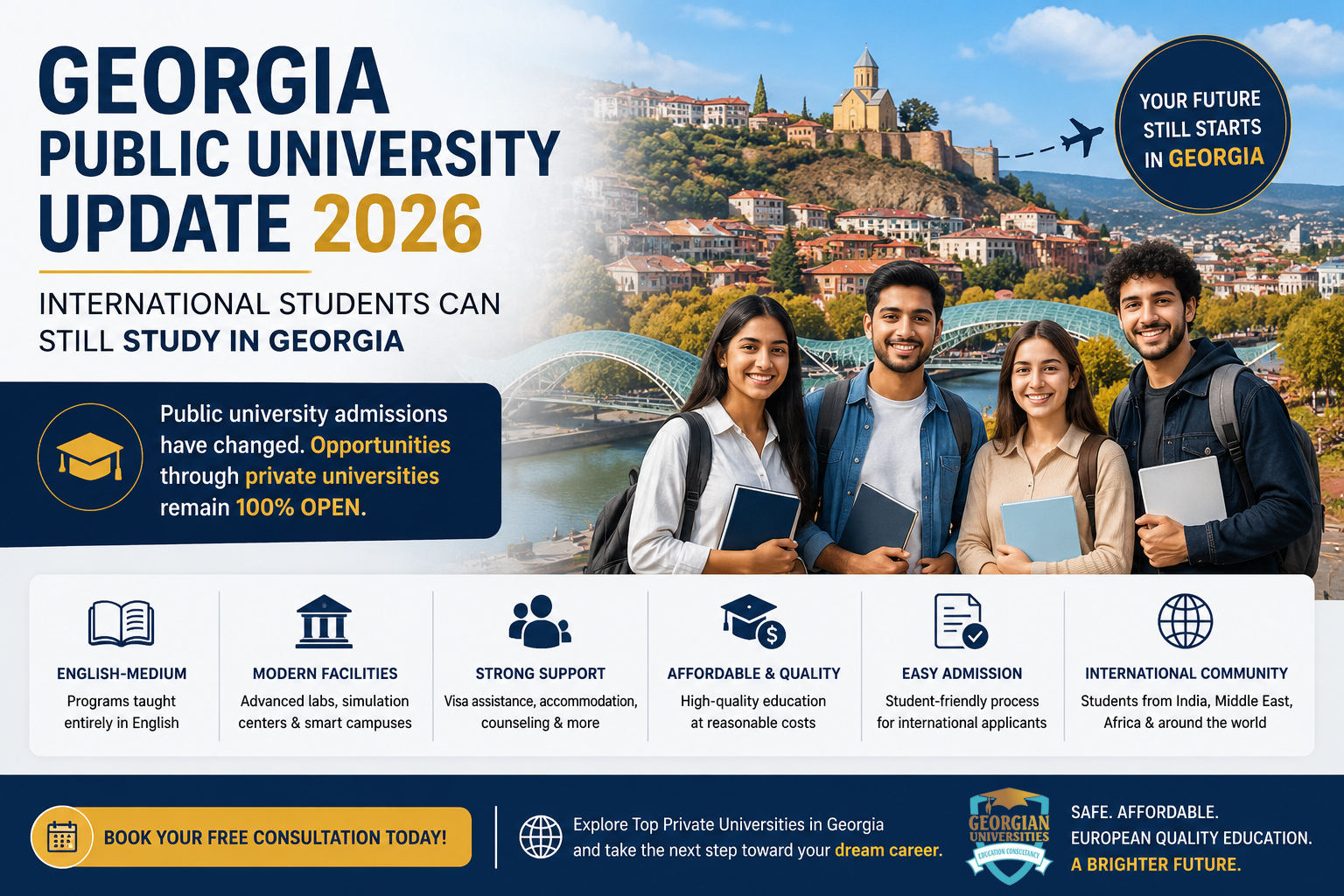
What's changed at public universities — and why private universities remain fully open for international students.
Read More →
Cost of living, campuses, safety, and community compared — so you can choose the right base for your degree.
Read More →Our advisors help students understand the Georgia student status and residence permit rules, plan registration deadlines, and stay on track academically — speak with someone who's navigated the Georgian universities admission and compliance process firsthand.